

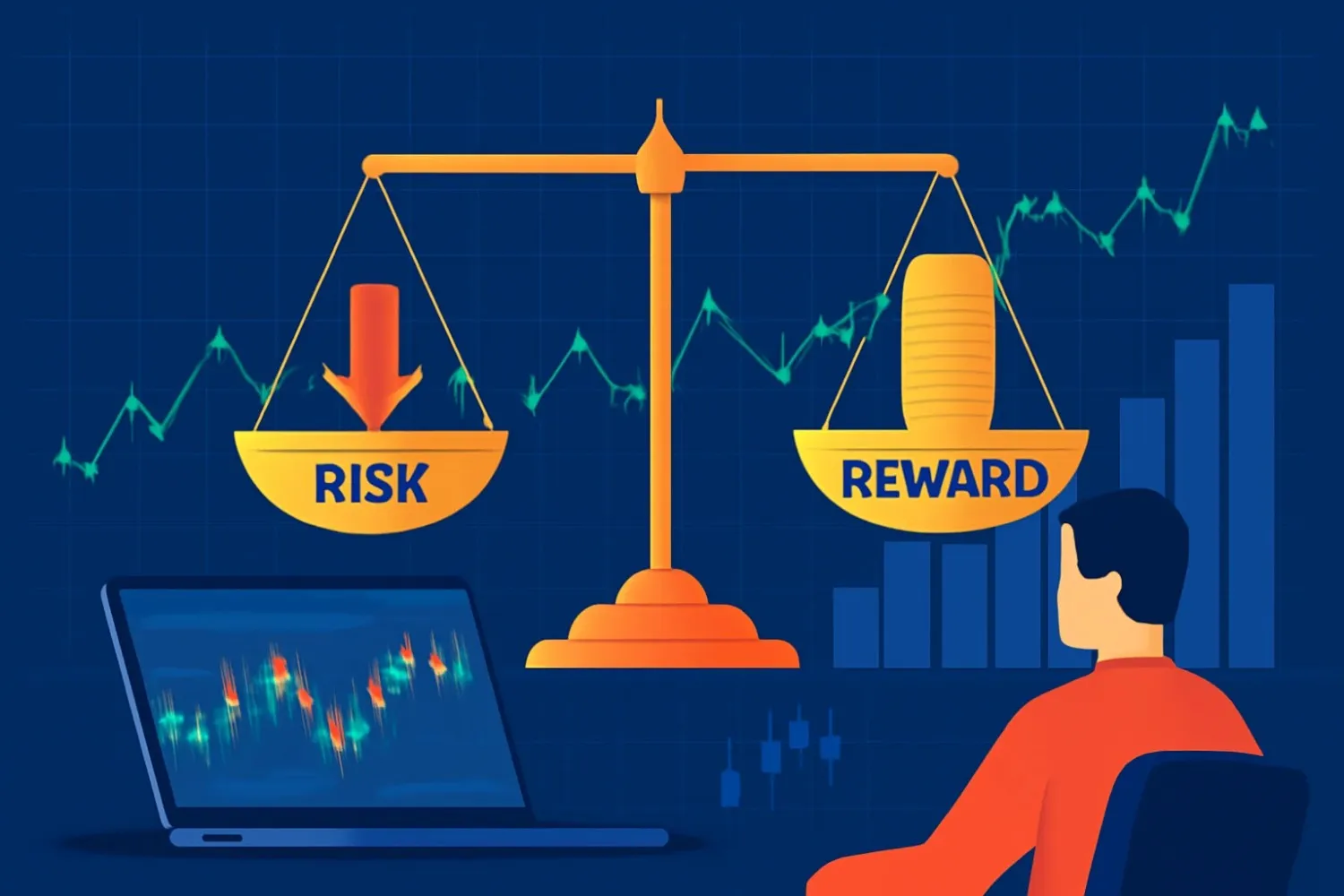
Introduction: Why Risk-Reward Ratios Matter
In trading, the risk-reward ratio is one of the most critical metrics for determining the potential success of a trading system. It compares the amount of risk a trader is willing to take on a trade to the potential reward that can be gained. Properly optimizing and managing the risk-reward ratio is essential to building a successful trading strategy that can be consistently profitable over time.
A well-balanced risk-reward ratio allows traders to control their exposure to loss while maximizing their potential gains. In fact, many successful traders base their entire strategies on managing risk effectively rather than chasing high profits. This article explores the importance of the risk-reward ratio in trading system optimization and provides actionable insights on how to leverage it for better results.
What Is the Risk-Reward Ratio?
The risk-reward ratio is a calculation that helps traders evaluate the potential profitability of a trade relative to the risk they are taking. It is defined as the ratio of the potential profit to the potential loss on a trade.
How It Works:
-
Risk: The amount of money you are willing to lose on a trade, typically defined by your stop-loss level.
-
Reward: The amount of profit you aim to make on a trade, often defined by your take-profit target.
For example, if you risk $100 on a trade and expect to make $300 in profit, the risk-reward ratio would be 1:3.
Formula:
Risk-Reward Ratio=Potential LossPotential Profit\text{Risk-Reward Ratio} = \frac{\text{Potential Loss}}{\text{Potential Profit}}Risk-Reward Ratio=Potential ProfitPotential Loss
A higher risk-reward ratio means that the potential reward is much larger than the potential risk, and vice versa.
Why Risk-Reward Ratios Are Crucial for System Optimization
In trading system optimization, the risk-reward ratio plays a key role in determining whether a strategy is sustainable in the long run. Here’s why it’s so important:
1. Managing Risk
One of the primary goals of any trading system is to limit risk while maximizing profit. By incorporating an optimal risk-reward ratio, you can control how much you are willing to lose per trade in relation to how much you stand to gain. This helps you avoid large drawdowns that can wipe out your account.
Even if a system has a low win rate, a favorable risk-reward ratio can still make it profitable. For instance, if a system wins 30% of the time but has a risk-reward ratio of 1:3, the strategy can still generate profits over time.
2. Enhancing Consistency
Optimizing the risk-reward ratio in a trading system helps you maintain consistency in your approach. Trading with a favorable risk-reward ratio ensures that each trade has an equal opportunity for success, regardless of the number of losses. When you adhere to a strict risk-reward ratio, it becomes easier to stick to your system and avoid emotional decisions that can derail your long-term success.
3. Avoiding Over-Leveraging
The risk-reward ratio can also play a role in avoiding over-leveraging. By adjusting your position size based on the potential reward and risk, you can ensure that you’re not overexposing yourself on any given trade. An optimal risk-reward ratio enables you to use appropriate leverage without jeopardizing your capital, maintaining a balanced approach to risk.
How to Optimize the Risk-Reward Ratio in Your Trading System
Optimizing the risk-reward ratio is a dynamic process that involves adjusting key elements of your trading system. Here are some actionable steps to fine-tune your risk-reward ratio for maximum effectiveness.
1. Define a Realistic Stop-Loss and Take-Profit Strategy
The first step in optimizing the risk-reward ratio is to set realistic stop-loss and take-profit levels. These levels should reflect market conditions, volatility, and the type of strategy you’re implementing.
Stop-Loss Optimization:
-
Set stop-losses based on technical analysis, such as recent swing lows, trendlines, or volatility measures (e.g., Average True Range).
-
Avoid placing stop-loss orders too close to your entry, as market noise may trigger premature exits.
-
Use a dynamic stop-loss based on volatility or a trailing stop to adjust the stop-loss as the trade moves in your favor.
Take-Profit Optimization:
-
Set take-profit levels based on support/resistance zones, major price levels, or a multiple of your risk (e.g., 2x the risk).
-
Avoid greedy profit targets that exceed the market’s typical move, as they can result in missed opportunities.
-
Adjust take-profit levels as the market evolves to lock in profits before trends reverse.
2. Use a Risk-to-Reward Ratio Formula That Fits Your Strategy
When determining the ideal risk-reward ratio, it’s important to align it with your trading strategy. Different strategies will require different ratios, depending on their win rates and profit expectations.
Common Risk-Reward Ratios:
-
1:2 Ratio: This ratio is commonly used for strategies that have a higher probability of success (60-70% win rate).
-
1:3 or 1:4 Ratio: This is ideal for lower win-rate systems (30-40%) that can generate large profits when they do win. It’s common in breakout and trend-following strategies.
-
1:1 Ratio: Some high-frequency traders or scalpers use a 1:1 ratio for quick trades, especially in highly liquid markets with low spreads.
3. Adjust Position Sizing Based on the Risk-Reward Ratio
Your position size directly affects the risk of your trades. Even with a favorable risk-reward ratio, poor position sizing can lead to significant losses. Adjust your position size according to the amount of capital at risk to ensure that each trade aligns with your overall risk management strategy.
Position Sizing Strategies:
-
Fixed Fractional Method: Risk a fixed percentage (e.g., 2%) of your account balance on each trade, regardless of the risk-reward ratio.
-
Kelly Criterion: A more advanced method that calculates the optimal position size based on the expected win rate and the risk-reward ratio.
-
Volatility-Based Sizing: Adjust position sizes based on market volatility, allowing for larger positions in low-volatility conditions and smaller ones during high volatility.
By adjusting position sizes based on the risk-reward ratio, you can maximize profits while minimizing the risk of large losses.
4. Backtest and Forward Test the System
After optimizing your risk-reward ratio, it’s essential to backtest and forward test your trading system to ensure that the chosen ratio works effectively under various market conditions.
Backtesting Tips:
-
Backtest your strategy using historical data across different time periods to evaluate its performance.
-
Test the strategy on multiple timeframes and assets to check its robustness.
-
Track performance metrics such as win rate, drawdown, and profit factor.
Forward Testing Tips:
-
Forward test in a demo account or with small live capital to validate the risk-reward ratio in real-time conditions.
-
Continuously monitor how the system adapts to changing market conditions and adjust the risk-reward ratio as needed.
5. Continuously Optimize and Refine
Optimization is not a one-time process. As market conditions evolve, so should your system. Continuously monitor your trades, assess performance, and adjust your risk-reward ratio to ensure that it stays effective.
Optimization Strategies:
-
Regularly re-evaluate the risk-reward ratio based on the market’s current volatility, trends, and conditions.
-
Consider adjusting your take-profit or stop-loss levels when volatility changes or after significant market events.
-
Use machine learning or AI tools to track and optimize risk-reward ratios automatically based on real-time market data.
The Impact of Risk-Reward Ratios on Long-Term Success
Achieving profitability in trading is not just about taking big risks for big rewards. It’s about balancing risk with reward in a way that ensures consistency. A well-optimized risk-reward ratio allows you to:
-
Survive market fluctuations: Even during losing streaks, a favorable risk-reward ratio helps your system remain profitable in the long run.
-
Maximize returns without excessive risk: A system with a 1:3 or higher risk-reward ratio can afford to lose more trades and still come out profitable.
-
Create a sustainable trading strategy: Consistent small profits, when combined with proper risk management, lead to sustainable long-term growth.
Conclusion: Mastering the Risk-Reward Ratio for Optimization
In trading, the risk-reward ratio is an essential component of system optimization. By setting realistic stop-loss and take-profit levels, optimizing your risk-reward ratio for your trading strategy, and adjusting position sizes accordingly, you can build a system that minimizes risks while maximizing potential profits.
Backtesting, forward testing, and continuously refining your strategy are key to ensuring that the risk-reward ratio is not just theoretical but works in real-world conditions. By mastering the risk-reward ratio and integrating it into your overall trading plan, you increase your chances of long-term trading success.