

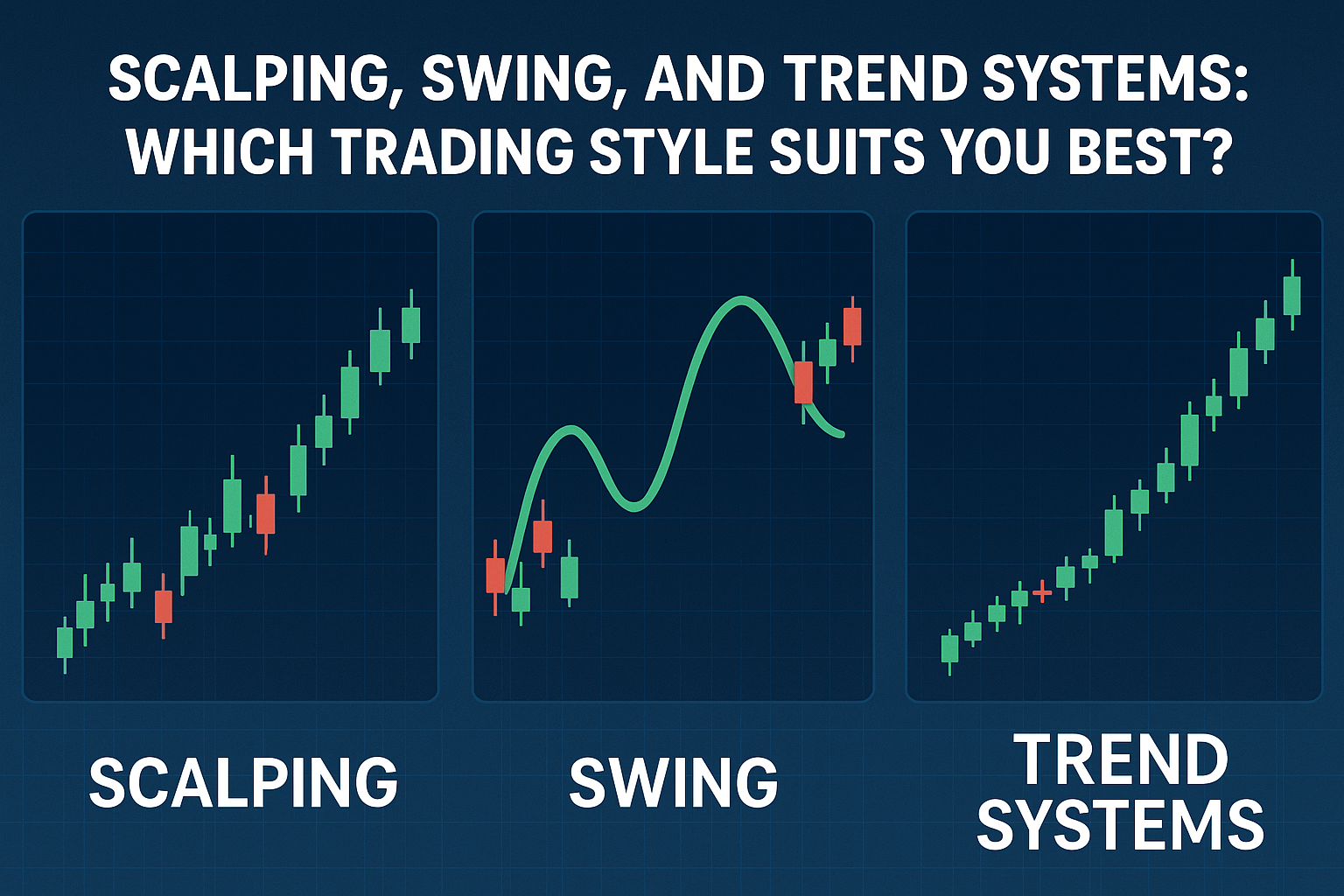
Introduction to Trading Styles: Why Choosing the Right One Matters
Every trader is different—and so is every trading system. Choosing the right trading style isn’t just about potential profits; it’s about aligning with your risk tolerance, time availability, and personality. The three most common trading systems—scalping, swing trading, and trend trading—each offer distinct advantages, challenges, and psychological demands.
Understanding which trading style fits you best will help you trade more consistently, reduce stress, and ultimately improve long-term performance. Let’s dive into each system and help you decide which one aligns with your strategy and mindset.
What Is Scalping?
Scalping is a short-term, high-frequency trading strategy where traders aim to make small profits on many trades throughout the day. Scalpers usually hold positions for seconds or minutes, never hours.
Key Characteristics:
-
Dozens to hundreds of trades per day
-
Very small profit targets (5–15 pips in forex)
-
Extremely tight stop losses
-
Dependence on market volatility and liquidity
-
Heavy use of technical indicators like Bollinger Bands, RSI, and Moving Averages
In 2025, many scalpers use automation or semi-automated bots to execute trades at lightning speed. Scalping is common in forex and crypto markets, where liquidity and volatility are high.
Best For:
-
Traders who can monitor markets full-time
-
Those who thrive in fast-paced environments
-
Individuals with quick decision-making skills
-
Traders who prefer technical setups over fundamentals
Pros:
-
Frequent trading opportunities
-
Quick feedback and learning cycle
-
Limited overnight risk
Cons:
-
Emotionally intense and stressful
-
Requires low spreads and fast execution
-
High transaction costs if not managed carefully
What Is Swing Trading?
Swing trading is a medium-term trading strategy that aims to capture price swings over a few days to weeks. It’s a more relaxed style compared to scalping but still requires active analysis and timely decision-making.
Key Characteristics:
-
Trades held for several days or weeks
-
Uses 4-hour, daily, and weekly charts
-
Combines technical analysis with fundamental insights
-
Focuses on price patterns, trend reversals, and breakouts
-
Relies on indicators like RSI, MACD, and Fibonacci retracements
Swing trading offers a balance between flexibility and opportunity. Traders can scan the market after work, place trades, and manage them with minimal daily interference.
Best For:
-
Part-time traders with limited screen time
-
Individuals who prefer moderate risk and fewer trades
-
Traders who want to avoid market noise but still stay active
-
Those who enjoy combining technical setups with news events
Pros:
-
Less time-consuming than scalping
-
Suitable for volatile and trending markets
-
Lower stress and decision fatigue
-
Strong risk-to-reward opportunities
Cons:
-
Overnight and weekend risk
-
Trades can take time to materialize
-
Requires patience and trust in the system
What Is Trend Trading?
Trend trading, or trend following, is a long-term strategy where traders ride significant market moves by identifying the direction of the prevailing trend. This style involves fewer trades but longer holding periods—often weeks to months.
Key Characteristics:
-
Focus on major trends and macro moves
-
Positions may be held for months
-
Use of daily, weekly, and monthly charts
-
Strong reliance on Moving Averages, ADX, and trendlines
-
Minimal reaction to short-term volatility
In 2025, trend traders often leverage AI-powered trend analyzers and macroeconomic dashboards to determine when trends are forming or reversing.
Best For:
-
Investors who prefer low maintenance trading
-
Those with long-term financial goals
-
Traders with higher capital and lower leverage
-
Individuals who value macroeconomic context
Pros:
-
Potential for large profits from big moves
-
Fewer trades mean lower transaction costs
-
Less affected by short-term noise
-
Ideal for portfolio diversification
Cons:
-
Requires significant patience
-
Longer drawdown periods during consolidation
-
Fewer trading opportunities
-
Success highly dependent on trend strength and duration
Side-by-Side Comparison
| Feature | Scalping | Swing Trading | Trend Trading |
|---|---|---|---|
| Trade Frequency | Very High (daily) | Moderate (weekly) | Low (monthly/quarterly) |
| Holding Period | Seconds to minutes | Days to weeks | Weeks to months |
| Time Required | Full-time or active | Part-time (few hours/week) | Minimal (monitor occasionally) |
| Risk Exposure | Low per trade | Moderate | Higher per position |
| Profit Potential | Low per trade | Medium | High per trade |
| Market Analysis | Mostly technical | Technical + fundamental | Fundamental + technical |
| Stress Level | High | Moderate | Low (if patient) |
How to Choose the Right Style for You
Choosing the best trading system involves more than just profits. You need to match the system with your personality, lifestyle, and financial goals.
Ask Yourself:
-
How much time can I dedicate to trading?
-
If you can’t monitor markets constantly, scalping is not for you.
-
-
Do I enjoy fast-paced decision-making?
-
Scalping may suit you if you thrive under pressure.
-
-
Am I patient and emotionally stable?
-
Swing and trend trading require calm during market fluctuations.
-
-
Do I prefer data and automation?
-
Trend and scalping systems can benefit from algorithmic tools.
-
-
What is my capital size and risk tolerance?
-
Scalping requires low risk per trade but higher volume. Trend trading may need higher capital to withstand long-term fluctuations.
-
Your answers will help you filter out incompatible styles and narrow down your ideal trading approach.
Hybrid Approaches: The Best of All Worlds?
In 2025, many successful traders combine multiple styles for better diversification and risk management.
Examples include:
-
Scalping in high-volatility sessions, then swing trading over the weekend
-
Using trend-following as the core strategy while scalping during consolidations
-
Automated bots for scalping and manual analysis for swing positions
By combining systems, you reduce your reliance on a single market condition and smooth out your equity curve. However, this approach demands excellent organization, system integration, and discipline.
Tips for Mastering Any Trading Style
Regardless of which system you choose, success depends on how you apply and evolve it. Here are universal tips:
-
Backtest extensively: Know how your system performed in past market conditions.
-
Use a trading journal: Track emotions, setups, and outcomes.
-
Stick to your rules: Discipline matters more than prediction accuracy.
-
Limit emotional decisions: Use pre-set alerts, risk controls, and break periods.
-
Continue learning: Market behavior evolves, and so should your strategies.
Conclusion: Find the Style That Fits You, Not Just the Market
There’s no “best” trading system—only what’s best for you. Scalping, swing trading, and trend trading each offer viable paths to profitability, but the right one depends on your goals, time availability, psychological profile, and market understanding.
To recap:
-
Choose scalping if you’re active, love fast decisions, and can handle intense focus.
-
Choose swing trading if you prefer a balance of activity and flexibility.
-
Choose trend trading if you’re patient, like long-term planning, and want to trade with low stress.
Test each style in a demo account, track your comfort and results, and refine as you go. The right trading style will feel aligned—not forced.