

Automated trading has transformed Forex trading by allowing traders to execute trades with minimal manual intervention. These systems, often known as trading bots or copy trading platforms, can significantly improve efficiency, reduce emotional bias, and execute strategies in real time. However, traders and firms often face a critical choice: use free copy trading tools or invest in paid solutions. In this guide, we explore the advantages and disadvantages of free and paid automated trading tools, discuss how copy forex trades free works, and provide insights on leveraging free forex tools for beginner and advanced traders.
What Is Automated Forex Trading
Automated Forex trading refers to the use of software to execute trades on behalf of traders. This software follows pre-defined rules for trade entry, exit, position sizing, and risk management. The goal is to remove emotional decision-making, increase efficiency, and take advantage of real-time market opportunities, a strategy closely aligned with automated forex trading and its benefits in Forex markets.
Key components of automated trading include:
- Algorithmic rules: Pre-set conditions for when to enter or exit a trade.
- Risk management: Automatically adjusts positions to maintain safe exposure.
- Integration with brokers: Connects directly to trading accounts for live execution.
- Analytics and reporting: Provides performance data for ongoing evaluation.
Automated trading can range from simple rule-based systems to advanced AI-powered platforms. The choice between free and paid tools significantly affects the trading experience and potential outcomes.
Understanding Free Copy Trading
Free copy trading allows users to replicate trades of professional traders without any cost beyond standard broker fees. Many brokers and platforms provide this functionality as a way to attract new clients, leveraging copy trading automation to allow seamless trade replication in real time.
How Free Copy Trading Works
- Trader Selection: Users select top-performing traders to copy.
- Automatic Execution: Trades executed by the chosen trader are mirrored in the user’s account in real time.
- Customization Options: Some platforms allow users to adjust the trade size or set stop-loss levels.
- Performance Tracking: Users can monitor returns and assess which traders perform consistently.
Free copy trading is ideal for beginners who want to learn by observing experienced traders while minimizing financial risk. Platforms like eToro and ZuluTrade offer free copy trading features to help users engage without upfront costs.
Advantages of Free Copy Trading
- Low Barrier to Entry: No subscription or software fees are required.
- Learning Opportunity: Beginners can see real-time strategies in action.
- Risk Reduction: Users can start with small capital while mirroring trades of successful traders, which makes what is copytrading more accessible for beginners looking to learn from the experts.
- Accessible Platforms: Free copy trading is often integrated directly into broker accounts.
Limitations of Free Copy Trading
- Limited Features: Free tools may not provide advanced analytics, custom alerts, or flexible automation rules.
- Lower Execution Priority: Trades may execute slower than in premium systems.
- Restricted Trader Access: Some top-performing traders may only be available in paid tiers.
- Less Support: Free tools typically have minimal customer support and limited educational resources.
Exploring Free Forex Tools
Free forex tools include charting software, signal providers, and automated trading platforms offered without cost. These tools help traders execute basic strategies, analyze markets, and replicate trades, similar to ai forex trading, which brings automation and smart analysis to the forefront.
Common types of free forex tools:
- Charting Platforms: TradingView and MetaTrader 4/5 provide free charting and technical indicators.
- Signal Services: Free alerts and notifications highlight potential trading opportunities.
- Automated Scripts: Basic Expert Advisors (EAs) can execute simple rule-based strategies.
- Copy Trading Options: Many brokers integrate free copy trading directly into client accounts.
Benefits of Free Forex Tools
- Cost Efficiency: Enables traders to practice and experiment without financial risk.
- Educational Value: Provides insights into strategy development and market analysis.
- Accessibility: Most tools are available to any account holder, regardless of capital.
Drawbacks of Free Forex Tools
- Limited Functionality: May lack advanced risk management features.
- Fewer Updates: Free tools may not be updated regularly to reflect market changes.
- Execution Limitations: Slower execution speeds can impact trade efficiency.
Advantages of Paid Automated Trading Tools
Paid automated trading tools often offer advanced features, superior execution, and dedicated support. For serious traders and professional accounts, these tools can provide an edge in a highly competitive market.
Key Benefits
- Enhanced Analytics: Paid tools offer in-depth performance tracking, risk assessment, and predictive modeling.
- Customizable Automation: Traders can create complex strategies, set advanced alerts, and automate risk management.
- Faster Execution: Paid platforms often prioritize trade execution to minimize slippage.
- Dedicated Support: Access to customer service, strategy guidance, and troubleshooting.
- Exclusive Trader Access: Some platforms restrict high-performing signal providers to paid subscribers.
Paid tools are ideal for traders with larger capital, professional accounts, or those seeking higher levels of customization and performance reliability, just like trading bots which allow seamless automated decision-making.
Limitations of Paid Automated Trading Tools
While paid tools provide advantages, they also have limitations.
- High Cost: Monthly subscriptions or one-time fees can be expensive, especially for new traders.
- Complexity: Advanced features require technical knowledge and strategy development skills.
- Overreliance Risk: Traders may depend too heavily on automation, reducing personal skill development.
- Market Risk Still Exists: Paid tools reduce execution risk but do not eliminate losses from market volatility.
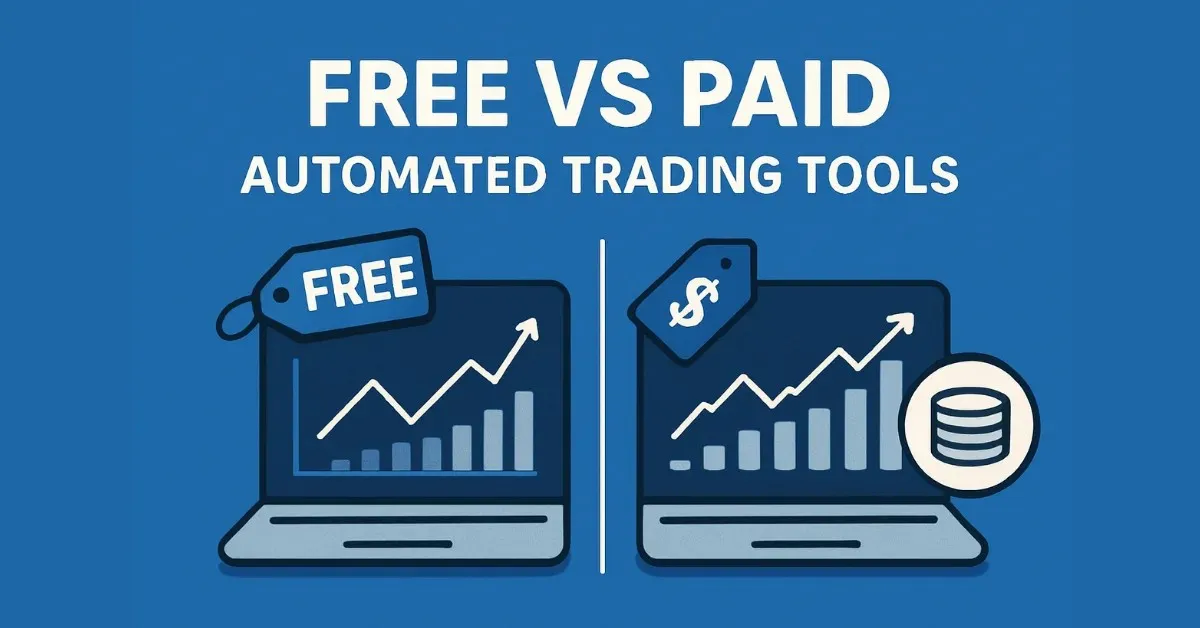
Comparing Free vs Paid Tools
| Feature | Free Tools | Paid Tools |
| Cost | Free | Subscription or one-time fee |
| Features | Basic indicators and scripts | Advanced analytics, automation, risk management |
| Execution Speed | Standard | Priority, faster execution |
| Support | Minimal | Dedicated customer service |
| Learning Opportunities | Good for beginners | Advanced strategies for experienced traders |
Understanding these differences helps traders and product teams decide which tools align with their needs, capital, and trading goals.
How to Choose Between Free and Paid Tools
When deciding between free and paid automated trading tools, traders should consider:
- Trading Experience: Beginners may start with free tools to practice and learn.
- Capital Availability: Paid tools are more suitable for larger accounts.
- Strategy Complexity: Complex strategies often require paid automation for accuracy and efficiency.
- Support Needs: Traders who rely on customer service may prefer paid platforms, especially those looking for enhanced support for systems like how does copy trading work, where platform assistance is crucial for maximizing returns.
- Long-Term Goals: Consider whether the tool aligns with growth and risk management objectives.
For brokerages, offering both free and paid options can attract a broad audience, from beginners seeking copy forex trades free to professional traders requiring robust paid automation.
Free Copy Trading vs Paid Copy Trading
Free copy trading allows traders to replicate strategies without upfront costs. Paid copy trading provides additional features, premium strategies, and advanced analytics.
Free copy trading is suitable for:
- Learning and practicing strategies
- Small capital accounts
- Observing professional trading behavior
Paid copy trading is suitable for:
- High-frequency traders
- Professional accounts with substantial capital
- Traders seeking advanced risk management and analytics
Risk Management Considerations
Regardless of tool choice, effective risk management remains critical. Position sizing, stop-loss orders, and portfolio diversification are essential practices.
Tips to manage trading risks:
- Limit risk per trade to a small percentage of account equity.
- Diversify across currency pairs and strategies.
- Use automated stop-loss and take-profit levels.
- Monitor performance and adjust strategies as needed.
Even the most advanced tools cannot replace disciplined risk management, which is why copy trading in forex is often coupled with robust risk management strategies to ensure sustainable success.
Leveraging Free Tools for Learning
Traders can maximize the value of free forex tools by:
- Using demo accounts to practice strategies without real capital.
- Following top traders on free copy trading platforms to observe risk management practices.
- Combining free charting tools with automated scripts to backtest strategies.
- Gradually increasing capital once strategies demonstrate consistent performance.
Free tools offer low-risk opportunities for learning, strategy testing, and experience building, making them an ideal starting point for understanding copy trading meaning and its role in risk management.
Paid Tools for Professional Growth
Paid automated trading tools support more advanced trading practices:
- Access to exclusive signal providers and high-performing strategies.
- Integration of AI or algorithmic trading for predictive insights.
- Advanced position sizing calculators and risk management modules.
- Faster execution and reduced slippage for critical trades.
Professional traders often combine paid tools with custom strategies to improve efficiency, execution, and profitability.
Conclusion
Choosing between free copy trading and paid automated trading tools depends on capital, experience, and trading goals. Free tools provide an excellent starting point for beginners, allowing practice, learning, and risk-free engagement with the markets. Paid tools offer advanced analytics, faster execution, and customizable automation, making them suitable for professional traders and larger accounts.
Regardless of the choice, risk management and strategic practice remain essential. Proper position sizing, stop-loss levels, and monitoring ensure traders can protect their capital and maintain long-term growth.