
Why Trading Systems Matter at Every Level
A trading system is more than just a set of rules—it’s a structured approach that helps traders make objective decisions in the market. Whether you’re a beginner trying to find your footing or an expert managing multiple accounts, the right system can significantly improve your consistency and profitability.
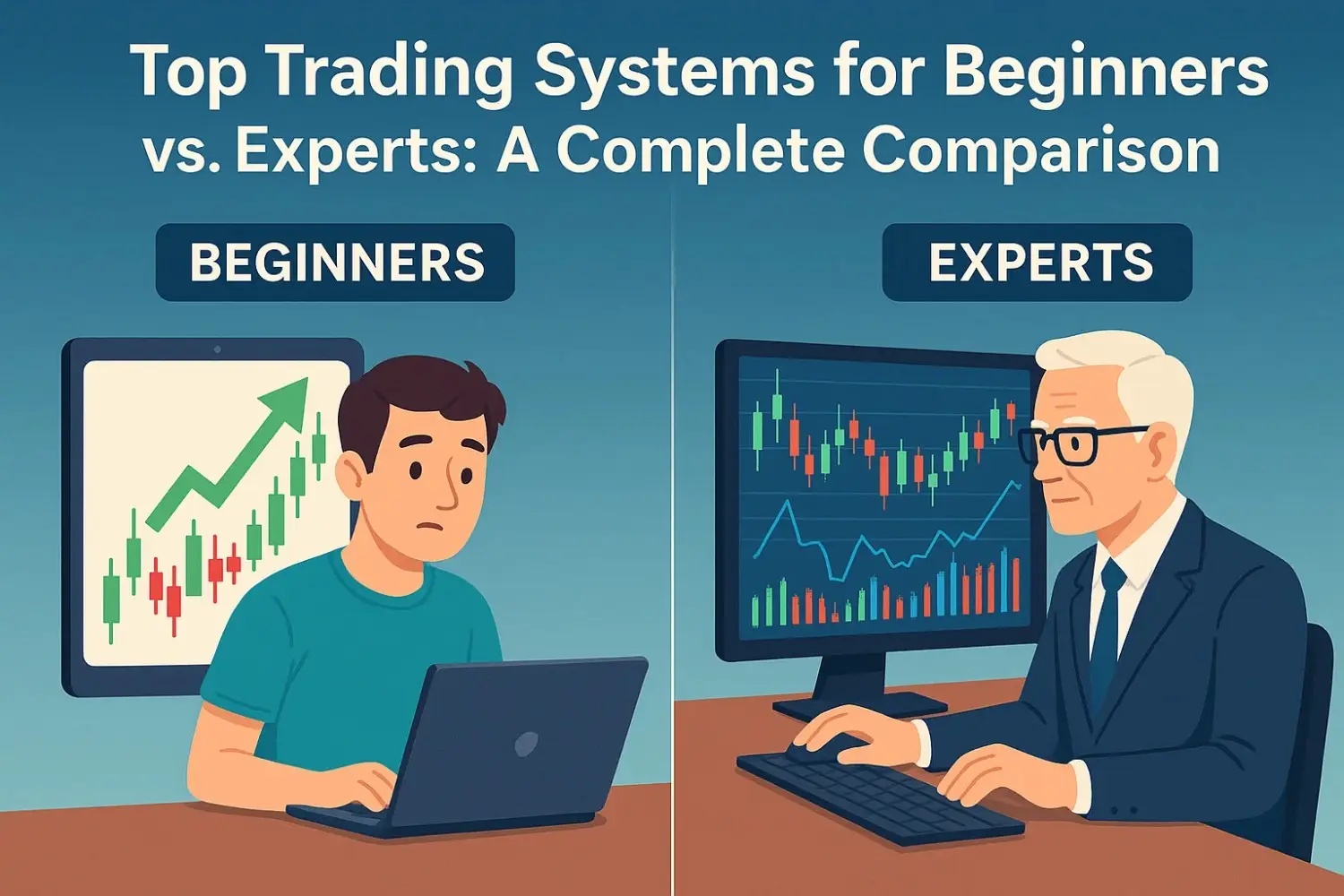
Beginners often need simplicity, structure, and safety. Experts, on the other hand, seek efficiency, scalability, and adaptability. This guide compares the top trading systems suited for both skill levels, helping you choose the one that aligns with your goals, experience, and risk tolerance.
1. Trend Following System
For Beginners:
Trend following is one of the most recommended systems for beginners due to its simplicity and low trade frequency. It involves identifying and following the direction of the market—buying when prices are rising and selling when they fall.
Beginner Advantages:
- Simple to understand and execute
- Fewer trades = fewer mistakes
- Lower emotional stress
- Uses basic indicators like Moving Averages and MACD
Downsides for Beginners:
- Requires patience during consolidation
- Delayed entries can lead to missed moves
For Experts:
Experts use more advanced tools to fine-tune entries and exits, including AI-based trend detectors and custom indicators. They often apply the system across multiple asset classes and timeframes.
Expert Advantages:
- Can manage multiple instruments simultaneously
- Use of automation to identify emerging trends early
- Application of trailing stops, pyramid strategies, and scaling
Best For: Both skill levels—beginner-friendly and highly profitable when mastered.
2. Scalping Strategy
For Beginners:
Scalping involves making dozens (or hundreds) of quick trades per day, each aiming for small profits. While exciting, it’s typically not recommended for most beginners.
Challenges for Beginners:
- Requires fast decision-making and execution
- Emotionally demanding and stressful
- High transaction costs and broker requirements
- Mistakes compound quickly
However, some beginners with day-trading aspirations may explore micro-scalping with demo accounts for learning purposes.
For Experts:
Scalping is popular among expert traders using high-speed algorithms or direct market access. They rely on precise strategies, often built in Python or MQL5, executed within milliseconds.
Expert Advantages:
- High-frequency profit potential
- Execution with bots reduces emotional decisions
- Use of ECN brokers, low latency VPS, and automation
Best For: Experts only—demanding in skill, hardware, and discipline.
3. Swing Trading System
For Beginners:
Swing trading is ideal for new traders with limited screen time. It involves holding trades for several days to weeks, capturing medium-term market moves.
Beginner Advantages:
- Easy to manage part-time
- Lower stress and less screen time
- Combines technical and fundamental analysis
- Uses common tools like RSI, MACD, and candlestick patterns
Drawbacks for Beginners:
- Patience required during trade setups
- Potential for overnight or weekend risk
For Experts:
Professional swing traders may combine technical setups with fundamental triggers like earnings reports, macro trends, or sentiment analysis. Many automate signal generation and focus on position sizing and portfolio balance.
Expert Advantages:
- Combines precision with scale
- Efficient risk management through advanced analytics
- Custom scripting for backtesting and alerts
Best For: Excellent for both beginners and experts—high adaptability and moderate learning curve.
4. Copy Trading and Social Trading
For Beginners:
Copy trading allows users to replicate the trades of experienced traders automatically. Platforms like eToro and ZuluTrade provide transparency, performance tracking, and easy account setup.
Beginner Advantages:
- No need for deep market knowledge
- Diversification via multiple traders
- Learning opportunity by following experts
Risks:
- Overreliance on others’ strategies
- Risk of following unvetted or high-risk traders
- Platform fees or slippage
For Experts:
Top-performing traders often monetize their strategies by allowing others to copy them. This creates an additional income stream while enhancing their personal brand and community engagement.
Expert Benefits:
- Performance incentives and platform commissions
- Reputation building
- Access to more capital via followers
Best For: Beginners looking to learn passively; Experts looking to monetize their skills.
5. Breakout Trading System
For Beginners:
Breakout systems look for price movement beyond support or resistance levels. It’s a fairly straightforward system that can work well with simple setups.
Beginner-Friendly Features:
- Clear entry and exit signals
- Ideal during high volatility
- Visual confirmation using price action
Challenges:
- High rate of false breakouts
- Requires stop-loss discipline
- Best during news or economic events (which require awareness)
For Experts:
Experts often apply breakout systems with filters like volume surges, order book depth, and real-time news analysis to avoid traps. Some use machine learning to anticipate breakout zones.
Expert Tools:
- News-based AI alerts
- Smart entry orders and multi-leg positions
- Backtested patterns on historical breakouts
Best For: Beginners with caution; Experts with tools and filters.
6. Algorithmic Trading
For Beginners:
Pure algorithmic trading requires coding and is not typically beginner-friendly. However, some platforms offer drag-and-drop automation tools or allow beginners to use pre-built bots.
Beginner Use Cases:
- Simple bot trading via tools like MetaTrader’s Expert Advisors
- Using third-party platforms like Kryll or TradeSanta
- Learning basic logic through demo bots
Risks:
- Lack of understanding leads to misuse
- Blindly trusting bots without real-time monitoring
For Experts:
Experts develop proprietary algorithms with specific logic for entries, exits, and risk management. They may use programming languages (Python, R, MQL5) and backtest strategies across decades of data.
Expert Advantages:
- Full control over execution
- Scalability and multi-asset trading
- Integration with APIs, sentiment data, and machine learning
Best For: Beginners using simple automation tools; Experts for full-scale systems.
7. Grid Trading
For Beginners:
Grid trading involves placing buy and sell orders at fixed price intervals. While it’s easy to automate, it’s risky for beginners due to exposure during trending markets.
Drawbacks for Beginners:
- Exposure to large drawdowns
- Requires margin management
- Best in ranging markets only
For Experts:
Experts can automate dynamic grids, set anti-martingale or hedge logic, and use volatility filters. These advanced features reduce risk and increase system resilience.
Expert Benefits:
- Controlled lot sizing
- Dynamic grids that adapt to price
- Use of AI for volatility and trend prediction
Best For: Experts with risk controls; not ideal for most beginners.
Side-by-Side Summary: Trading Systems by Experience Level
| Trading System | Suitable for Beginners | Suitable for Experts | Notes |
| Trend Following | ✅ Easy to start | ✅ Highly scalable | Best for all levels |
| Scalping | ❌ High skill required | ✅ Excellent with automation | Demands discipline |
| Swing Trading | ✅ Flexible and simple | ✅ Advanced portfolio management | Part-time friendly |
| Copy Trading | ✅ Passive learning | ✅ Monetization tool | Ideal for non-tech traders |
| Breakout Trading | ✅ Visual setups | ✅ Optimized with news filters | Needs strong discipline |
| Algorithmic Trading | ⚠️ Requires tools | ✅ Full control, automation | High reward with learning |
| Grid Trading | ❌ High risk | ✅ Dynamic implementation | Ranging markets only |
How to Transition from Beginner to Expert Systems
If you’re just starting out, begin with swing trading or trend following. These systems teach foundational concepts like entries, exits, and discipline—without overwhelming complexity.
As you gain experience:
- Start demo testing advanced systems (like breakout or grid trading)
- Learn basic coding or explore no-code automation tools
- Analyze your own trades using journals and equity curves
- Gradually add position sizing, risk management, and performance metrics
- Join trading communities or mentorship groups for real-world insights
Over time, you can transition into expert-level systems like algorithmic or scalping strategies that demand more capital, control, and confidence.
Conclusion: Match Your System to Your Stage
The best trading system isn’t the one with the highest returns—it’s the one you can understand, manage, and stick to consistently.
- If you’re a beginner, start with swing or trend following. These systems offer structure, simplicity, and learning opportunities.
- If you’re an expert, build scalable systems like algorithmic bots, high-frequency scalping, or advanced multi-asset swing strategies.
As your experience grows, so can your systems. The key is to master one system at a time, validate it through backtesting and forward testing, and evolve as the markets—and your skills—do.